Harcourt Square
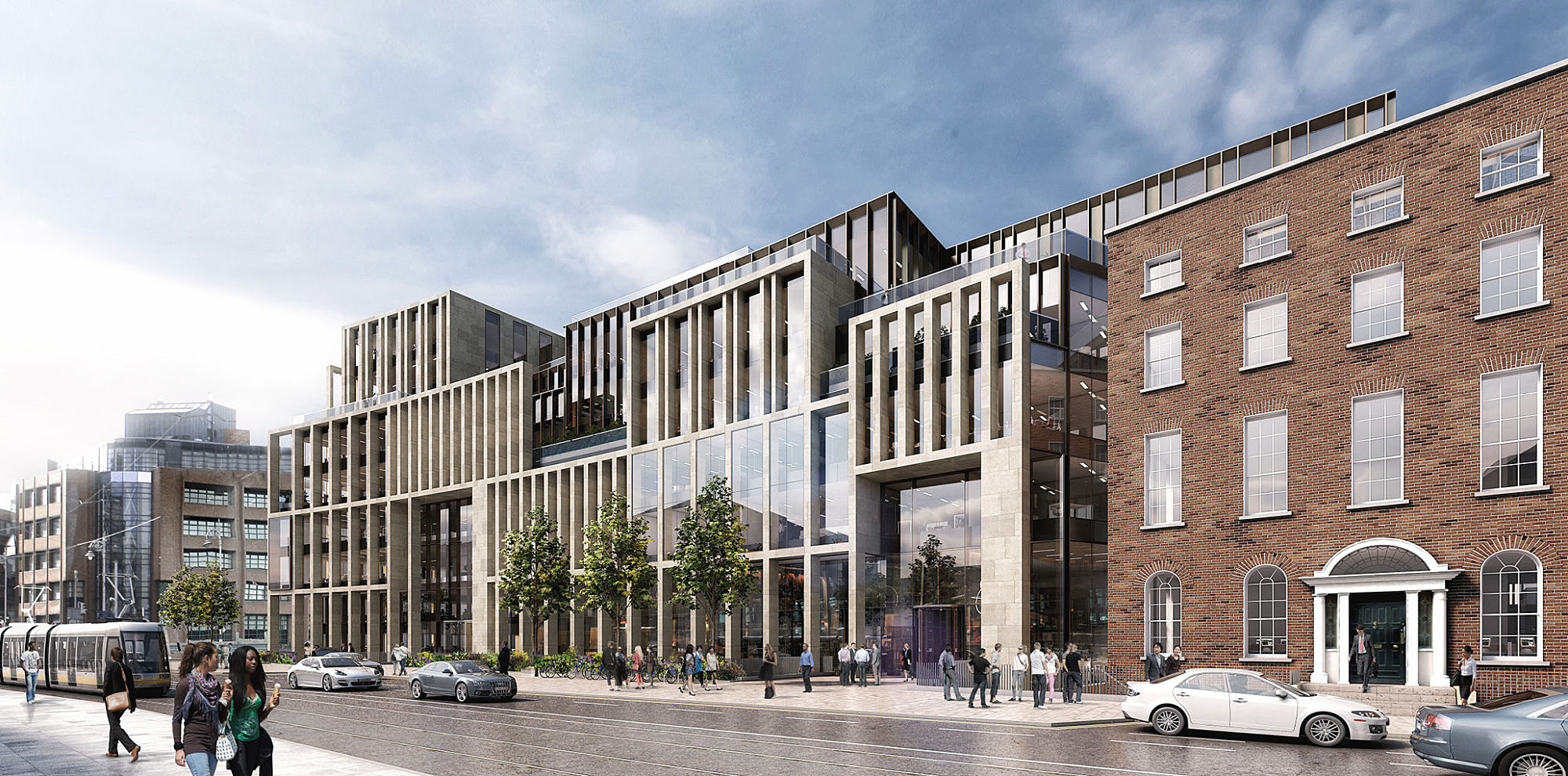
Fostering a positive relationship to the streetscape, the new development foregrounds spaces for gathering and collaboration.
Harcourt Square, an exemplar office development by Henry J Lyons for Hibernia REG, provides over 37,500 sqm of best-in-class, headquarters-style office, commercial, and support space within an elegant contemporary building. Restoring the line of the streetscape, the building mediates between a Georgian terrace and nearby large-scale commercial buildings, and transforms the public realm with new active loggias and sunken gardens. A layered, ordered façade of limestone, anodised aluminum, and glass references both Georgian Dublin and nearby historic buildings such as the National Concert Hall. Inside, arranged around a pair of atria, efficient and light-filled office space has been designed for optimal performance and flexibility.
[350,000 sq ft]
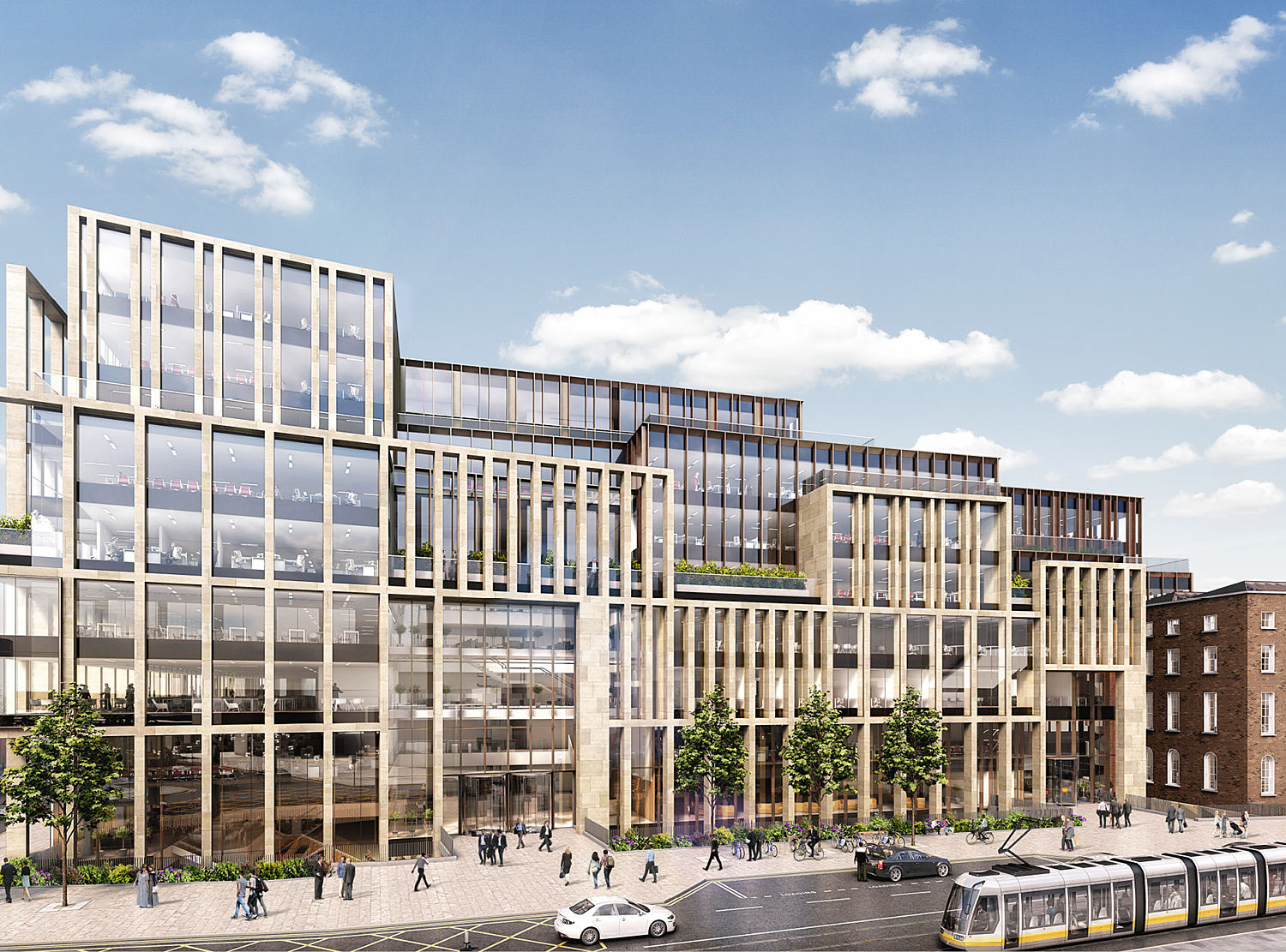


The primary elevational grid of limestone columns and engaged pilasters – including some twin column arrangements – is a modern interpretation of the generous porticoed facades at the nearby National Concert Hall and the old Harcourt St Railway Station. Behind this stone frame, a secondary order of deep bronze anodised aluminium fins shades floor-to-ceiling glazing. This layering of columns and fins provides passive solar control, visual hierarchy, and rhythm, with variations of scale, pitch, and density responding to orientation and the internal programme.
The double-height arrangement of the stone-framed facade minimises the building’s perceived height. The vertical rhythm proportionally enlarges that of the Georgian townhouses. On Charlotte Way, the building’s volume fully engages with the elevational frames, but to the east, internal spaces playfully engage and disengage from the stone ‘screen’, creating terraces within the depth of the façade and a deep loggia along the curve of Harcourt Street.
Flexibility in the envelope design allows for multiple points of entry. A generous ‘active’ atrium creates a ceremonial entrance, with a soaring feature staircase pulling the eye up to the glazed roof while secondary atrium draws daylight deep into the building and provides opportunities for spontaneous interaction.